
What stood in the way
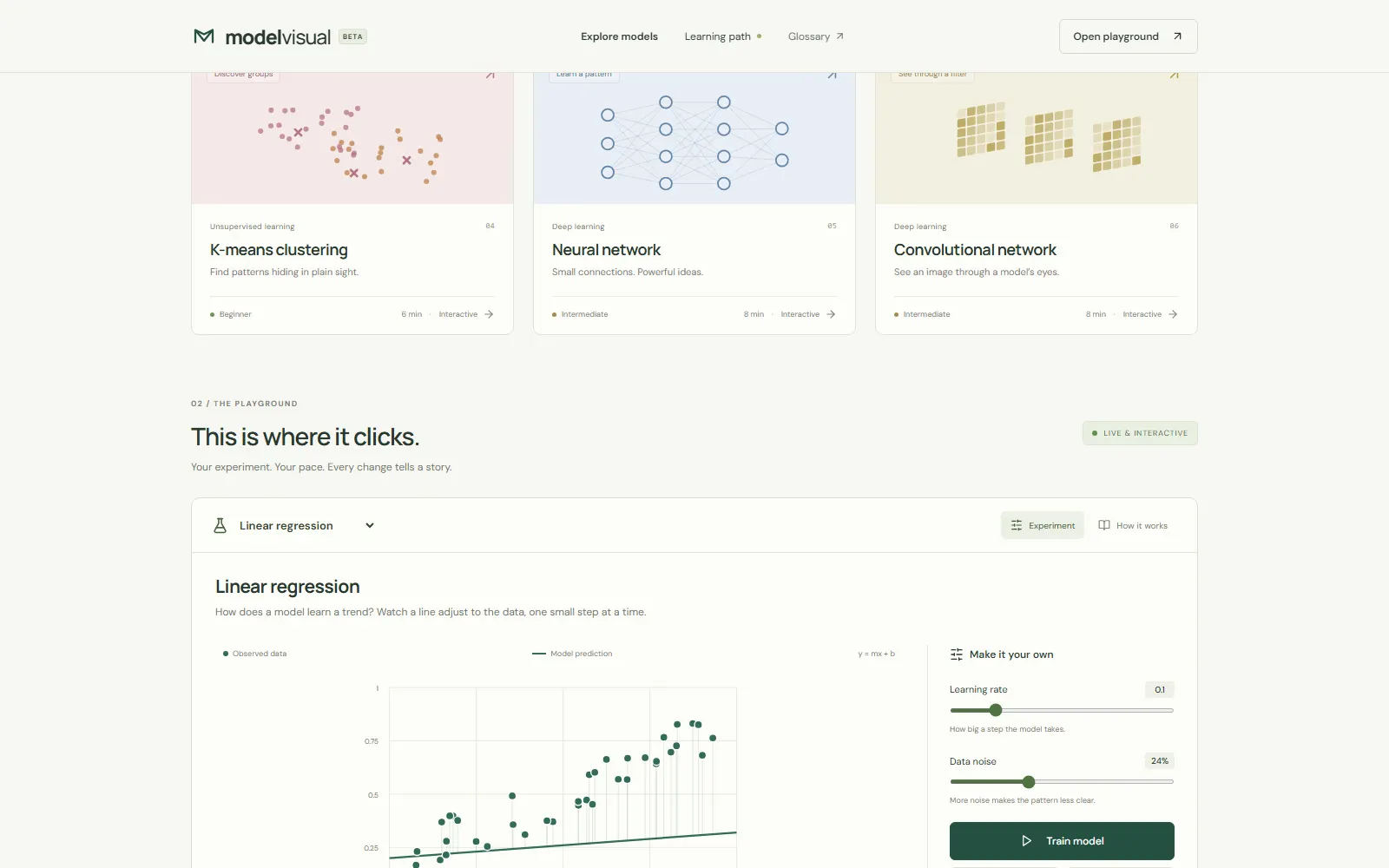
Real algorithms—gradient descent, k-nearest neighbors, decision trees, k-means, neural networks and convolutions—had to run smoothly in the browser and stay mathematically honest while being friendly to first-timers.
Six machine-learning models you can actually play with.
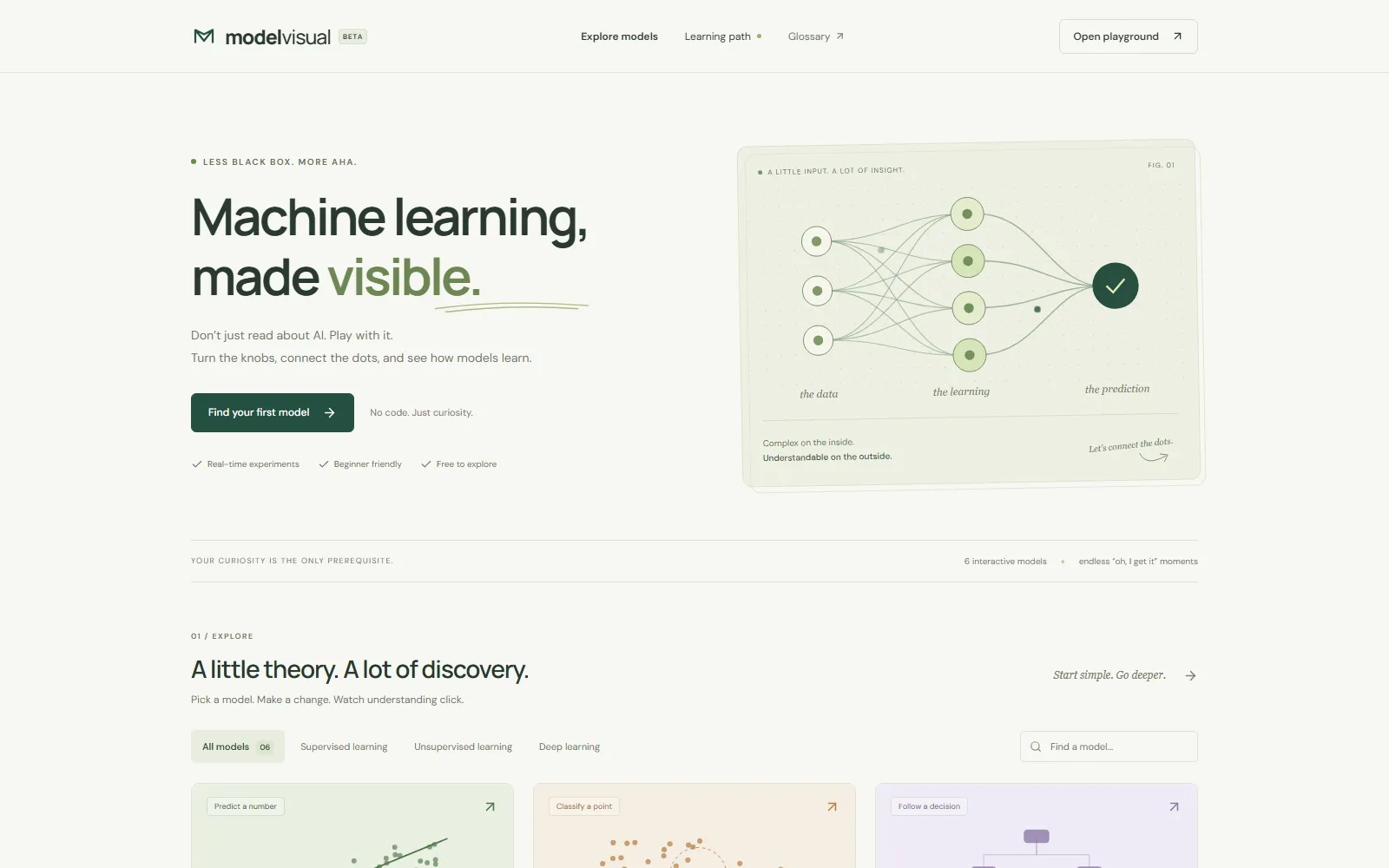
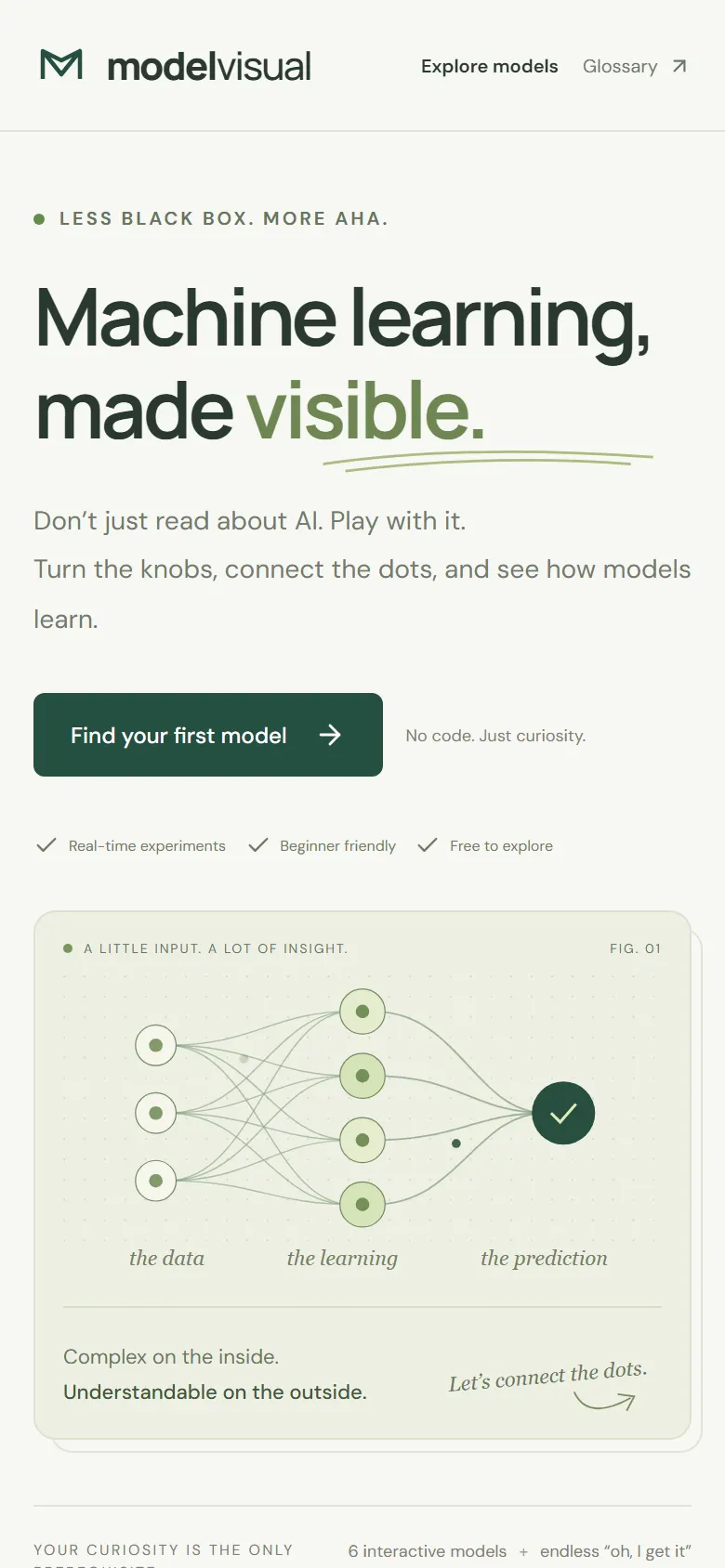
Model Visual makes machine learning feel tangible for beginners. Instead of formulas first, people turn the knobs, add data points and watch a model learn—no code and no sign-up.
Visit the live site (opens in a new tab)| Client | Model Visual |
|---|---|
| Role | Product Design & Interactive Engineering |
| Timeline | 7 weeks |
| Year | 2026 |
Curriculum design and algorithm selection.
Visual language for data, models and controls.
In-browser model engines and SVG renderers.
Math verification, usability testing and deploy.
Real algorithms—gradient descent, k-nearest neighbors, decision trees, k-means, neural networks and convolutions—had to run smoothly in the browser and stay mathematically honest while being friendly to first-timers.
We built a React and Vite playground where every model trains on small data in real time, rendered as crisp SVG. Learners can click to add points, change the learning rate or noise, and step through training while live metrics update. Models are grouped into supervised, unsupervised and deep learning, with a guided learning path.
Outcomes come from the Nuoxsoft project record and the live site. They are not independently measured metrics.